Blog
Dental instruments

Inside the Dentist’s Toolkit: A Comprehensive Guide to Essential Dental Instruments
Dental instruments are the specialized tools that dentists use to examine, diagnose, treat, and maintain the oral health of their patients. While some instruments are designed for routine check-ups and cleanings, others are intricate devices engineered for complex procedures like root canals or dental implants. Understanding the function of these tools can demystify a visit to the dentist and highlight the precision required in modern dentistry.
The array of dental instruments can be overwhelming, but they can be broadly categorized based on their specific roles. A core set of essential tools is used in nearly every dental procedure, forming the foundation of effective oral care.
Key Categories of Dental Instruments
1. Examination and Diagnostic Instruments
These are the first tools a dentist uses during an initial check-up to assess the overall health of the mouth, teeth, and gums.
-
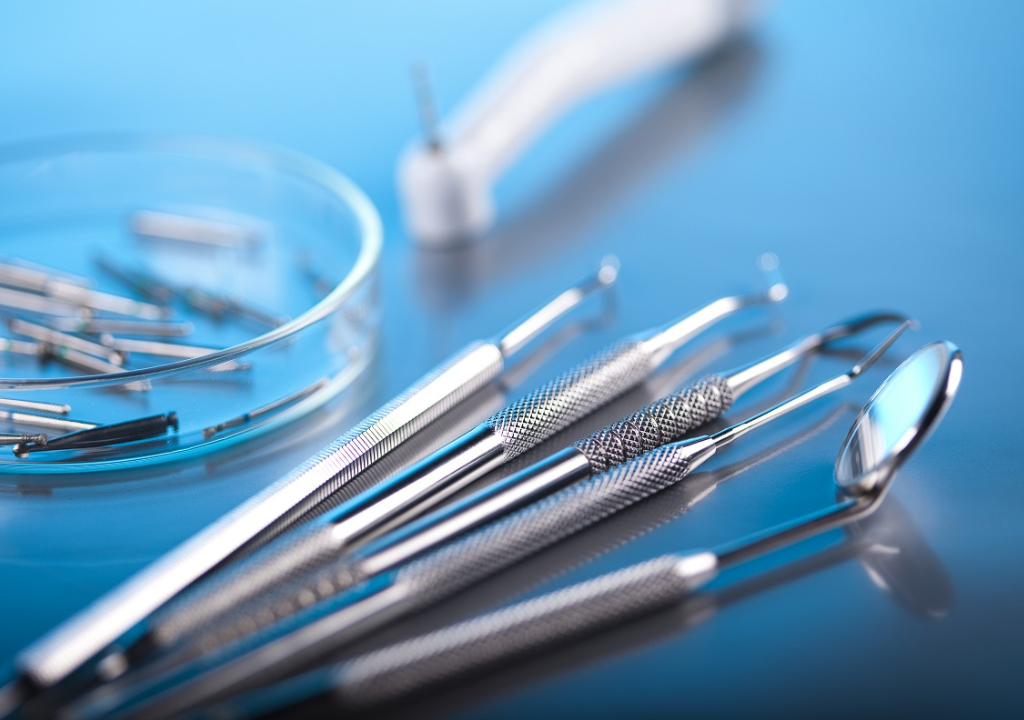
Dental Mirror: This small, angled mirror allows the dentist to see the back of the teeth, parts of the mouth that are hard to view directly, and to reflect light onto specific areas.
-
Dental Explorer (or Sickle Probe): This instrument has a sharp, hooked end and is used to detect cavities (caries), feel for roughness or irregularities on the tooth enamel, and check the integrity of existing fillings or crowns.
-
Periodontal Probe: A blunted, rod-like instrument with millimeter markings, it measures the depth of the pockets between the teeth and gums. This helps diagnose periodontal (gum) disease.
2. Prophylaxis and Cleaning Instruments
These instruments are specifically designed to remove plaque, tartar (calculus), and stains from the teeth to prevent decay and gum disease.
-
Dental Scalers: These come in various shapes and sizes (like sickle scalers and curettes). They have sharp edges to manually scrape away hardened tartar from the tooth surface, both above and below the gum line.
-
Ultrasonic Scaler: This power-driven device uses high-frequency vibrations and a water spray to rapidly remove large amounts of tartar, often faster and more comfortably than manual scaling.
-
Polishing Cup: A small, rubber cup attached to a slow-speed handpiece, it’s used with prophylaxis paste to polish the teeth after scaling, leaving them smooth and bright.
3. Restorative Instruments
These tools are essential for preparing a tooth for a filling and for placing and shaping restorative materials.
-
Dental Handpiece (the “Drill”): This is a critical power tool. High-speed handpieces are used to quickly remove decayed tooth structure or old fillings. Slow-speed handpieces are used for refining the preparation, polishing, or performing root canals.
-
Dental Burs: These are small, rotating cutting bits that attach to the handpiece. They come in dozens of shapes and materials (diamond, carbide) for tasks like cutting, grinding, and smoothing.
-
Amalgam/Composite Condensers: These instruments have flat or serrated tips and are used to pack or “condense” filling material (like silver amalgam or tooth-colored composite resin) tightly into the prepared cavity.
-
Burnishers and Carvers: These tools are used to smooth and shape the filling material to match the natural contours and bite of the tooth.
4. Surgical and Endodontic Instruments
These are used for more invasive procedures, such as extractions, gum surgery, or root canals.
-
Dental Forceps: These are specialized plier-like instruments designed to grip and extract teeth. There are different designs for different types of teeth and locations in the mouth.
-
Elevators: Used before forceps, these instruments help to loosen a tooth from its socket by severing the periodontal ligament.
-
Endodontic Files: These tiny, tapered, needle-like files are used to clean, shape, and debride the inside of the tooth’s root canals during a root canal procedure.
The Importance of Sterilization and Innovation
The vast majority of dental instruments are crafted from high-grade stainless steel or titanium, chosen for their strength, corrosion resistance, and ability to withstand rigorous sterilization. Titanium is often used for implants and surgical tools due to its biocompatibility.
Sterilization is a non-negotiable aspect of dental practice. After every use, instruments must be meticulously cleaned and then sterilized in an autoclave, which uses high-pressure steam to kill all microorganisms. Single-use, disposable items are also widely used where appropriate to prevent cross-contamination.
The field of dental instruments is constantly evolving. Innovations like laser dentistry, digital scanning, and computer-aided design and manufacturing (CAD/CAM) are changing the landscape. These advancements enhance precision, improve patient comfort, and lead to better treatment outcomes, making the dentist’s toolkit more powerful and effective than ever before.